top of page

BLOG

I have updated the portfolio for my ongoing project, People Pass, the Path Remains, removing a considerable number of works, adding new ones, and making the overall composition more concise. I would be grateful if you might visit the portfolio page.


This project, centered on ancient paths, has in recent months explored the pilgrimage routes of the Shikoku 88 Temple Pilgrimage as one of its themes. During a visit last month to Takamatsu in Kagawa Prefecture, I encountered a path that felt almost like a revelation. It was a mountain trail on the Goshikidai plateau known as the Negoroji Path, connecting the 81st temple, Shiromine-ji, and the 82nd, Negoro-ji.


Naturally, a road—even one known as a “pilgrimage route”—is not used exclusively by pilgrims; it is also shared by ordinary people, and even by bicycles and cars. In other words, a road as infrastructure is inherently multifunctional, open to all. And yet, this particular path—stretching just over five kilometers through the mountains—serves only a single purpose: to connect one temple to the next. Those who pass along this narrow, roughly worn trail, as if carved out by footsteps alone, are limited to pilgrims, a few hikers, and the occasional photographer such as myself.


As I made my way along it, taking more than two hours to walk and photograph, I encountered only a handful of people, despite the path being located on the outskirts of Takamatsu, one of Shikoku’s major cities. In a modern world that leaves little room for emptiness—so often defined by efficiency and constant movement—this journey offered a rare experience of time and space. The photograph accompanying this post was taken along that very path. It is my intention to continue the remaining journeys of this project with such “unnecessary” roads as a central subject.


Updated: Mar 31

I have previously introduced my ongoing project, From the Ancient Path, on several occasions. With this latest update, I have replaced a number of works and reconsidered its structure, and have now released a new portfolio under the revised title, People Pass, the Path Remains.


While the fundamental theme of the project remains unchanged, the original four-chapter structure—organized by subject—has been reconfigured into a three-part composition that places greater emphasis on the flow of images. The three chapters are titled Jo (序) / Introduction, Ha (破) / Development, and Kyū (急) / Finale.


This concept of jo-ha-kyū, originating in traditional Japanese court music (gagaku), is a principle of progression and tempo widely employed in music, dance, and theater, signifying three distinct stages of development. Set against the landscapes surrounding Japan’s ancient paths, and introduced by the following line in its preface, “Year upon year, the blossoms return unchanged; year upon year, those who see them are never the same,” this project carries a quiet, underlying sense of impermanence. It seemed to me that adopting the traditional structure of jo-ha-kyū would be a natural and fitting choice.


The project will continue through one or two further photographic journeys and is scheduled to be completed and published as a book early in summer. During this time, the work will remain in a process of ongoing refinement, and the portfolio will be updated accordingly. I would be grateful if you might visit from time to time and share your thoughts.


  • Writer: Toru Ukai
    Toru Ukai
  • Jan 5
  • 1 min read

In a world both uncertain and hopeful, may this coming year bring you happiness, good health, and quiet moments of grace.

Wishing you all the best, and thank you for your continued support.


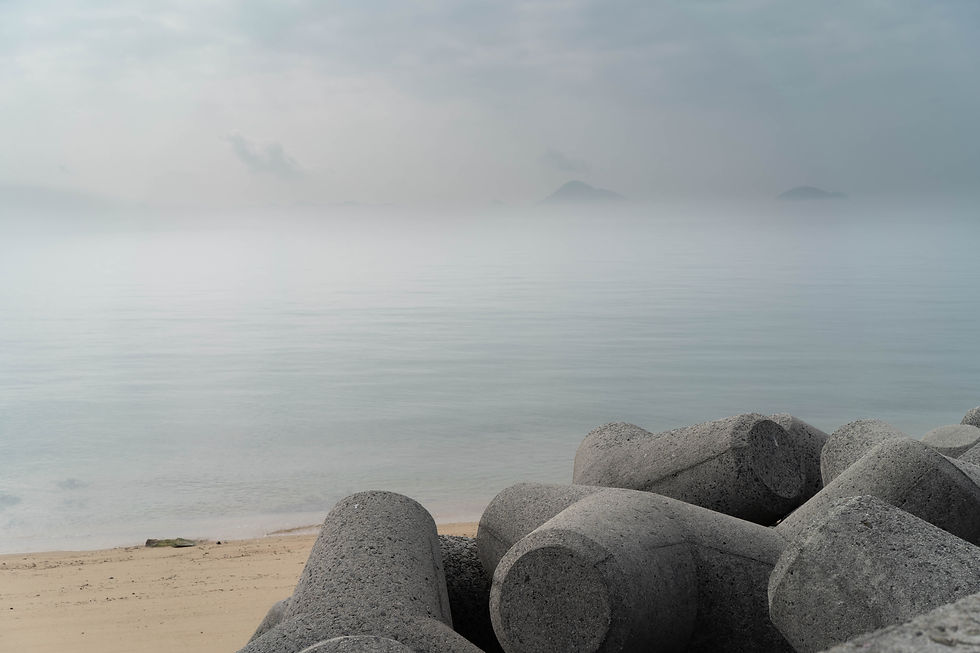
At the start of the new year, I have made some updates to my latest portfolio, From the Ancient Path, including the addition of around fifteen new pictures.

These newly added works were photographed along the Seto Inland Sea coast of Hiroshima Prefecture, as well as on its surrounding islands.

I hope you will take a moment to visit the site when time allows.


In the coming months, I plan to continue my photographic journeys further west along Honshu, and along routes that cross the Seto Inland Sea toward Shikoku.


Mihara Port, Hiroshima Prefecture © Toru Ukai, 2026

Subscribing to my BLOG

Thanks for subscribing!

All images © Toru Ukai, 2026

  • Facebook Clean
  • Facebookの - ホワイト丸
  • Flickr Clean
bottom of page